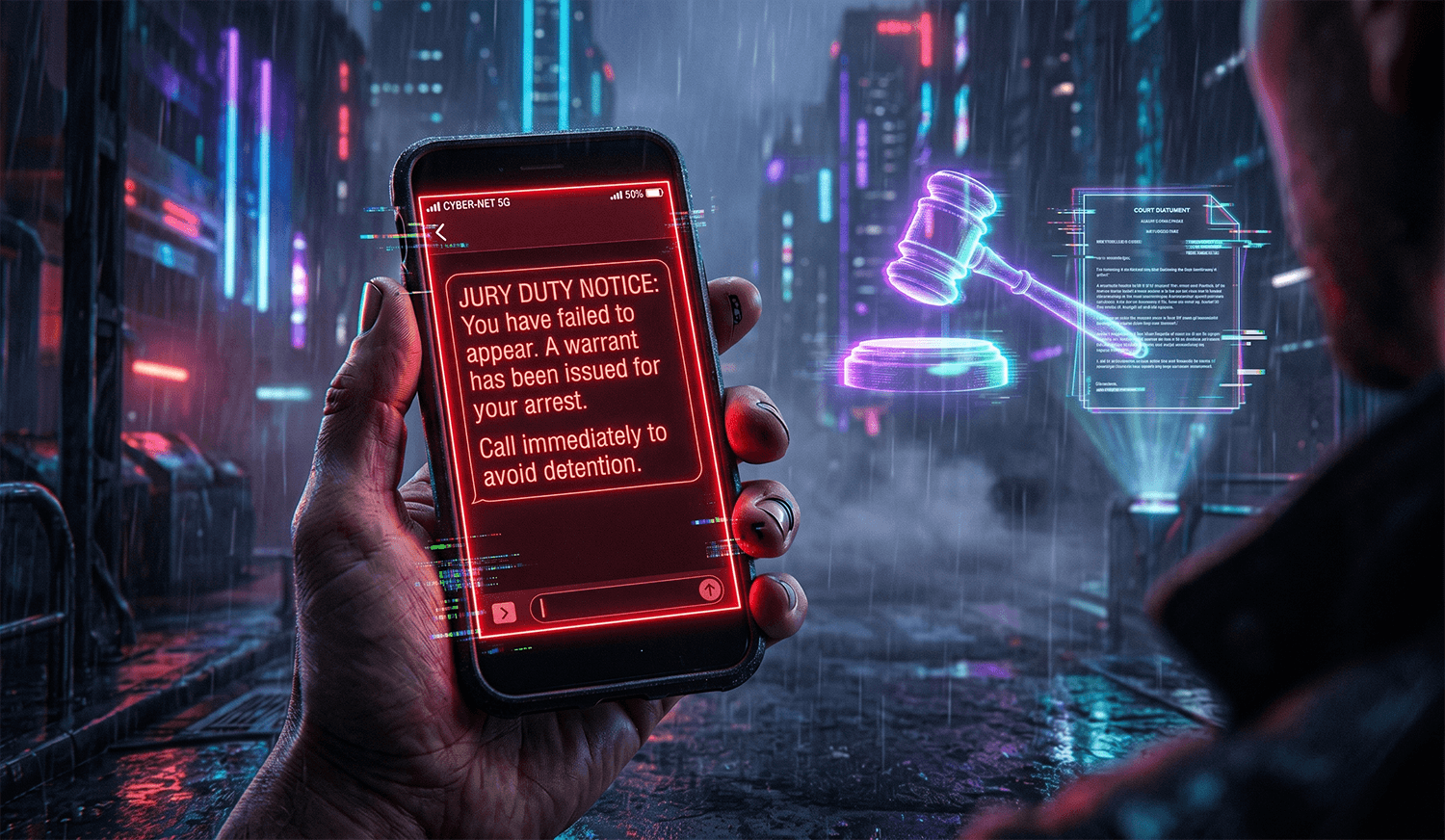
The New Hampshire Attorney General's Office recently issued an urgent public warning after a surge of fraudulent text messages began hitting residents' phones, messages that impersonate state courts and threaten arrest for missed jury duty or unpaid court fines. The scam is not isolated to New Hampshire. Similar waves have been reported across New England and nationwide, with scammers using court letterheads, case numbers, and official-sounding language to panic victims into paying within hours.
Here at RecentScam.com, we've been tracking this pattern closely. What makes this scheme especially dangerous is how convincingly the fraudsters mimic real court communications, including judge names, courthouse addresses, and even fake "failure to appear" warrants. Below is a full breakdown of how the scam works, what red flags to watch for, and exactly what to do if you've been targeted.
How the Fake Court Summons Text Scam Works
The scam begins with an unsolicited text message, sometimes an email or phone call, that appears to come from a state or county court. The message claims you missed jury duty, skipped a court date, or have an outstanding fine. It often includes a fabricated case number, a judge's name, and a warning that a bench warrant has been issued for your arrest. The tone is urgent and threatening: pay now or be taken into custody.
Once you respond or call the number provided, the scammer, posing as a court clerk, sheriff's deputy, or bailiff, walks you through a "resolution process." They'll claim the only way to cancel the warrant is to pay a fine immediately, usually between $500 and $5,000. Payment is almost always demanded through untraceable methods: prepaid gift cards (Apple, Google Play, Target), cryptocurrency deposits at Bitcoin ATMs, wire transfers, or payment apps like Zelle and Cash App.
To keep victims compliant, the scammers use psychological pressure. They instruct you not to hang up, not to speak with anyone, and not to leave the phone line until payment is confirmed. Some victims have been kept on the phone for hours while being directed to drive to a store, purchase gift cards, and read the codes back. In more advanced versions, scammers spoof caller ID so the number appears to come from an actual courthouse, and they email PDF "warrants" with official-looking seals and signatures.
After the first payment, the scam frequently escalates. Victims are told the payment "didn't go through," that additional processing fees are required, or that a second fine has been discovered. By the time the victim realizes what happened, the money is gone and untraceable.
Red Flags to Watch For
- A text message claiming you missed jury duty, court, or owe a court fine, real courts in the United States do not send arrest threats or demand payment by text message
- Demands for payment via gift cards, cryptocurrency, wire transfer, Zelle, Venmo, or Cash App
- Urgent language warning of immediate arrest, bench warrants, or contempt charges
- Instructions to stay on the phone and not speak with family, attorneys, or other court staff
- A caller who "verifies" your identity by asking for your Social Security number, date of birth, or bank details
- Fake PDF warrants or summons attached to emails or texts, often with typos or mismatched court names
- A phone number that doesn't match the official number listed on your state court's website
- Threats that escalate the longer you ask questions
Real Victim Report
One Manchester, New Hampshire resident reported to the FTC that she received a text claiming she had missed a jury duty summons and faced immediate arrest. When she called the number, a man identifying himself as a "Deputy Sheriff" instructed her to purchase $2,800 in Apple gift cards to avoid being taken into custody that afternoon. She stayed on the phone for nearly three hours, driving between three stores to buy the cards, because the caller insisted hanging up would trigger the warrant.
What To Do If You've Been Targeted
- Stop all contact immediately. Hang up the phone, block the number, and do not reply to the text. Legitimate courts will never keep you on a live call to collect payment.
- Do not send money or gift card codes. If you have gift cards you haven't yet shared, contact the card issuer right away, some purchases can be reversed if reported within hours.
- Verify directly with the real court. Look up your county or state court's phone number on the official .gov website and call to confirm whether any action is pending against you.
- Report the scam to the FTC at reportfraud.ftc.gov and file a complaint with the FBI's Internet Crime Complaint Center at ic3.gov.
- Contact your bank or payment app if you sent money. Request a fraud dispute, stop-payment, or reversal. Time is critical, act within 24 hours if possible.
- Place a fraud alert with one of the three credit bureaus (Equifax, Experian, or TransUnion) if you shared personal information like your Social Security number or date of birth.
- Consider identity theft protection. If your personal data was exposed, a service like Aura Identity Protection can monitor your credit, SSN, and financial accounts for misuse and alert you to suspicious activity.
How To Protect Yourself Going Forward
- Know the court's real process. U.S. courts communicate through physical mail, not text messages or Bitcoin ATMs. If you're ever unsure, hang up and call the courthouse directly using a number you look up yourself.
- Never pay anyone in gift cards. No government agency, court, or law enforcement office will ever ask you to pay a fine or bail with Apple, Google Play, or Target gift cards. This is always a scam.
- Talk to someone before paying. Scammers rely on isolation. Before you act on any urgent threat, call a family member, friend, or attorney. A 10-minute conversation can save you thousands.
- Enable spam and scam filtering on your phone. Both iPhone and Android have built-in settings to filter unknown senders and flag suspected scam calls.
Frequently Asked Questions
Will a real court ever text me about missed jury duty? ▼
I already sent gift card codes to the scammer. Can I get my money back? ▼
How did the scammer know my name and address? ▼
Written By
Our editorial team aggregates and verifies scam reports from threat-intelligence feeds (URLhaus, OpenPhish, PhishTank) and U.S. government complaint data (FTC, FCC), plus community submissions. See our methodology for how every record and article is sourced and reviewed. Read our methodology →