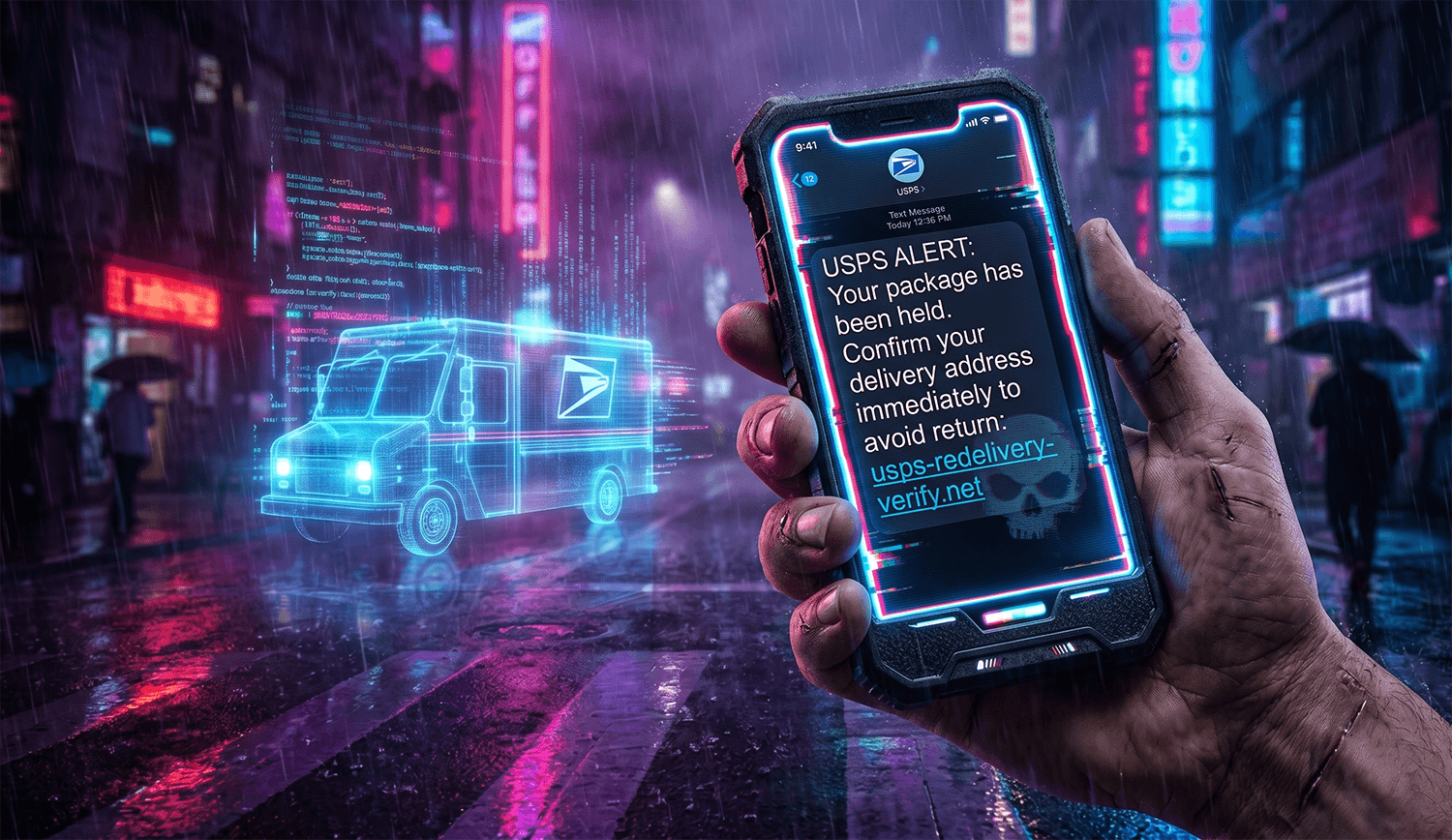
The Fake USPS Package Redelivery Text Scam is one of the most widespread smishing attacks hitting American phones in 2026, and it is costing victims their credit card numbers, driver's license details, and in some cases their entire identity. You get a simple-looking text claiming your package cannot be delivered because of an "incomplete address" or "unpaid redelivery fee." The message looks official, the logo looks real, and the link looks urgent. But the moment you tap it, you hand your personal data directly to a criminal operation.
The FBI's Internet Crime Complaint Center (IC3) and the Federal Trade Commission have both issued repeated warnings about this scam as it continues to evolve. What makes it especially dangerous is how convincing the fake USPS tracking pages have become, and how normal it feels to get a package update on your phone.
How the Fake USPS Package Redelivery Text Scam Works
The scam begins with a mass text blast sent from a spoofed number or an overseas SIM farm. The message usually reads something like: "USPS: Your package could not be delivered on [date] due to an incomplete address. Please update your information within 24 hours to reschedule delivery." A shortened or suspicious-looking link follows. The urgency and short deadline are intentional, scammers know panic kills careful thinking.
When you tap the link, you land on a near-perfect clone of the USPS.com tracking page. The site displays a fake tracking number and shows your "package" as held up at a distribution center. To release it, you are asked to confirm your full name, home address, phone number, and email. Once you submit that, the site asks for a small "redelivery fee", typically $1.99 or $3.30, and requests your credit or debit card details.
That small fee is bait. The real goal is to harvest your card number, CVV, expiration date, and billing ZIP. Within hours, scammers either sell your card on dark web markets or run test charges followed by large purchases. Some versions of the scam go further and ask for your Social Security number or driver's license, which opens the door to full identity theft. Some victims also receive follow-up phone calls from fake "USPS investigators" trying to extract more information.
Red Flags to Watch For
- The text contains a link to a domain that is not usps.com, watch for lookalikes like usps-delivery.xyz, usps-info.top, or usps.parcel-update.com
- USPS never asks for payment by text message for redelivery of standard packages
- The message creates artificial urgency with a 12-hour or 24-hour deadline
- The tracking number in the text does not match any package you actually ordered
- The sender is an email address (like usps-alert@mail.com) rather than a short code
- The landing page asks for credit card details for a tiny fee under $5
- The website asks for information USPS would never need, like your SSN or driver's license
- Grammar mistakes, odd capitalization, or strange spacing in the message body
Real Victim Report
One Tampa, Florida resident reported to the FTC that she received a USPS text about a $2.99 redelivery fee while waiting on a holiday package from her daughter. She entered her card details on what looked like the official USPS site, and within three hours saw $1,847 in fraudulent charges at online electronics retailers. When she called the number listed on the fake site to dispute it, a "USPS fraud agent" tried to convince her to share her bank login to "reverse" the charges.
What To Do If You've Been Targeted
- Stop all contact immediately, do not reply to the text, tap any further links, or call any numbers from the message.
- Do not send any more money or information, even if someone claiming to be from USPS or your bank calls you back.
- Report the scam text to USPS directly by forwarding it to spam@uspis.gov, then delete it.
- Report the incident to the FTC at reportfraud.ftc.gov with a screenshot of the text if possible.
- File a complaint with the FBI IC3 at ic3.gov, especially if money was lost or sensitive data was shared.
- Contact your bank or card issuer right away to cancel the card, dispute charges, and request a new card number.
- Place a free fraud alert with Equifax, Experian, or TransUnion, and consider enrolling in identity protection like Aura (aura.com/recentscam) to monitor your SSN, credit, and dark web exposure if you shared personal details.
How To Protect Yourself Going Forward
Never click links in delivery texts. If you are expecting a package, open the official USPS app or type usps.com directly into your browser and enter the tracking number you received from the original retailer. Real USPS tracking updates do not require you to enter payment details.
Enable spam filtering on your phone. Both iPhone and Android let you filter messages from unknown senders into a separate folder, which cuts your exposure to smishing dramatically. You can also report scam texts to your carrier by forwarding them to 7726 (SPAM), which helps carriers block the source numbers.
Slow down when any message creates urgency. Scammers engineer panic because it bypasses your judgment. If a text says you have 24 hours or your package will be returned, that is a red flag, not a reason to rush. Real delivery services hold packages for days and will leave a physical notice at your door.
Use a virtual card number for online purchases when your bank offers one. Services from Capital One, Citi, and many others generate a unique card number you can cancel instantly if compromised, which limits damage if you do fall for a fake payment page.
Frequently Asked Questions
Does USPS ever text you about redelivery fees? ▼
I clicked the link but didn't enter anything — am I still at risk? ▼
I already entered my credit card — what should I do right now? ▼
Written By
Our editorial team aggregates and verifies scam reports from threat-intelligence feeds (URLhaus, OpenPhish, PhishTank) and U.S. government complaint data (FTC, FCC), plus community submissions. See our methodology for how every record and article is sourced and reviewed. Read our methodology →