
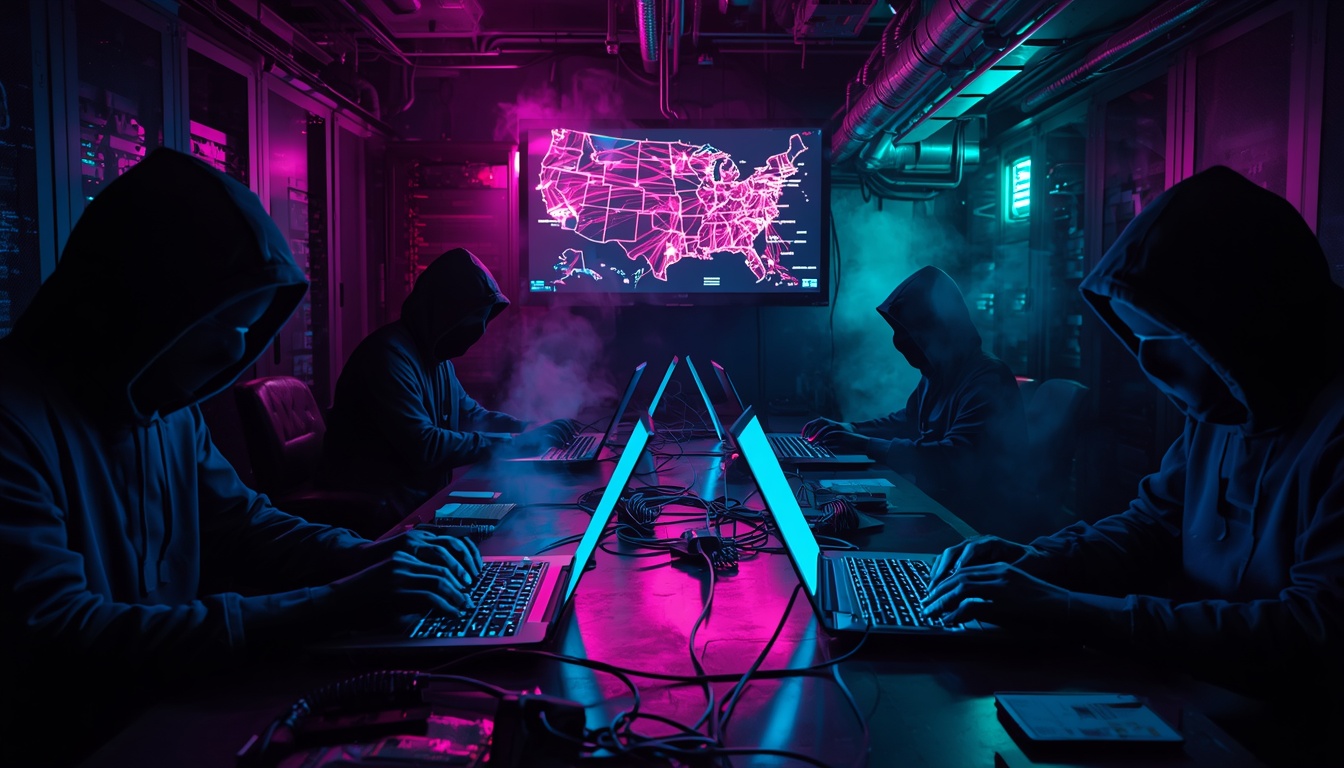
How the Interstate Cyber Fraud Network Works
Interstate cyber fraud networks operate as organized criminal enterprises that coordinate attacks across multiple states to evade detection and maximize their reach. These operations typically begin with the collection of personal data, which can be obtained through data breaches, dark web purchases, or simple phishing attacks. Once scammers have access to victim information like names, addresses, Social Security numbers, and financial details, they begin a coordinated assault that may involve several accomplices working in different states, each playing a specific role in the scheme.
The scam typically unfolds in layers. First, perpetrators establish fake businesses or impersonate legitimate companies in one state. They then contact victims in different states using spoofed phone numbers, fraudulent websites, or convincing emails that appear to come from banks, government agencies, or well-known companies. The messages create a false sense of urgency, claiming unauthorized account activity, a security breach, or a legal issue that requires immediate payment or personal information verification.
Once a victim responds, the criminals guide them through a series of steps designed to extract money or sensitive data. Some victims are directed to wire funds to addresses in other states, making it harder for authorities to track the money. Others are persuaded to purchase gift cards, cryptocurrency, or money transfer codes that can be liquidated quickly. The network structure means that by the time law enforcement in one state identifies the scam, the money has already been moved through multiple intermediaries across state lines, making recovery nearly impossible.
What makes these networks particularly dangerous is their sophistication and scale. Unlike isolated scammers, these organized operations maintain call centers, employ dozens of workers, and use technology to automate parts of their operation. They test different scripts on victims, refine their messaging based on what works, and quickly abandon tactics when they become publicly known.
Red Flags to Watch For
- Unsolicited contact claiming urgent action is needed regarding your bank account, government benefits, or legal status, especially when the message creates high pressure to act immediately without time to verify
- Requests for payment via untraceable methods like gift cards, wire transfers, cryptocurrency, or money transfer services like Western Union or MoneyGram
- Callers who refuse to let you hang up or verify their identity through official channels, insisting you must complete the transaction now
- Spoofed phone numbers that appear to be from your bank or a government agency, but the caller lacks basic information about your actual account
- Websites that closely mimic legitimate businesses but have slightly wrong URLs (like "bankofamerica-secure.com" instead of the real site)
- Requests for sensitive information like your full Social Security number, PIN, passwords, or one-time verification codes, which legitimate businesses never ask for over the phone or email
- Promises of easy money, tax refunds you didn't apply for, or lottery winnings from contests you never entered
- Requests to keep the situation secret or not tell your bank, family, or friends about the transaction
Real Victim Report
One Jacksonville, Florida resident reported to the FTC that she received a phone call from someone claiming to be from her bank's fraud department, warning her that someone had tried to withdraw $5,000 from her account. The caller had her last four digits and recent transaction history, which made the call seem legitimate. Over the course of two hours, the perpetrator convinced her to transfer $8,500 to a "secure holding account" to protect her funds, assuring her she would get it back within 48 hours. By the time she realized the scam, the money had been moved through multiple accounts across three states and was unrecoverable.
What To Do If You've Been Targeted
Stop all communication immediately with the scammer and do not send any additional money or provide any more personal information, even if they threaten legal action or claim your account will be closed.
Contact your bank or financial institution right away if you have already sent money, especially if it was through wire transfer, gift card, or cryptocurrency. Time is critical, and banks can sometimes halt fraudulent transfers if contacted quickly enough.
Report the fraud to the Federal Trade Commission by visiting reportfraud.ftc.gov or calling 1-877-438-4338. The FTC aggregates reports to identify patterns and shares information with law enforcement agencies.
File a complaint with the FBI's Internet Crime Complaint Center (IC3) at ic3.gov. This helps federal investigators track interstate fraud rings and build cases against organized networks.
Place a fraud alert on your credit file by contacting one of the three major credit bureaus (Equifax, Experian, or TransUnion). This makes it harder for scammers to open new accounts in your name. You can also consider placing a credit freeze to completely lock access to your credit report.
Monitor your credit reports and bank statements closely for the next 12 months for any unauthorized accounts or suspicious activity. You can get free annual credit reports at annualcreditreport.com.
Consider identity protection services like Aura (aura.com/recentscam) if personal data like your Social Security number or address was shared with the scammers, as this puts you at higher risk for long-term identity theft and fraud.
How To Protect Yourself Going Forward
The most effective defense against interstate cyber fraud networks is skepticism about unexpected contact. Legitimate banks, government agencies, and companies never call you requesting passwords, verification codes, Social Security numbers, or immediate payment. If you receive such a call, hang up and contact the organization directly using a phone number from an official website or your statements. This simple step stops most scams cold because it removes the scammer's ability to control the conversation.
Secondly, use strong, unique passwords for all your financial accounts and enable two-factor authentication wherever it is available. This creates a barrier that makes it much harder for criminals to access your accounts even if they have some of your personal information. Additionally, consider placing a credit freeze on your file if you are not actively applying for credit, as this prevents criminals from opening new accounts in your name even if they have your Social Security number and other details.
Finally, stay informed about current scams in your area. Local police departments, the FBI, and the FTC regularly issue warnings about specific fraud schemes targeting your region. Signing up for alerts from these agencies and checking them regularly means you will recognize a scam before it targets you. Many of these warnings describe the exact scripts scammers are using right now, so you can spot them immediately if someone calls you with similar language.
Frequently Asked Questions
How do interstate cyber fraud networks get my personal information in the first place? ▼
If I sent money to a scammer, is it gone forever? ▼
Why do these scams cross state lines instead of staying in one area? ▼
Written By
Our editorial team aggregates and verifies scam reports from threat-intelligence feeds (URLhaus, OpenPhish, PhishTank) and U.S. government complaint data (FTC, FCC), plus community submissions. See our methodology for how every record and article is sourced and reviewed. Read our methodology →


.jpg)